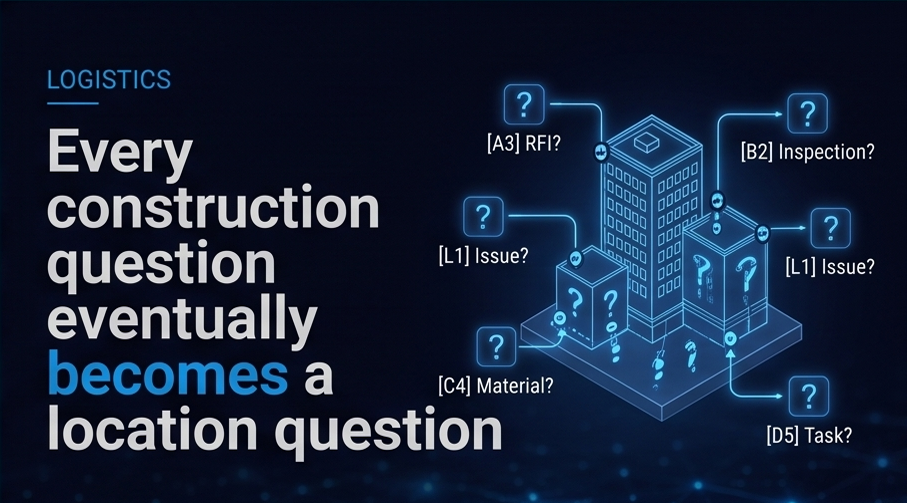

Construction projects generate an overwhelming amount of information.
Drawings. Models. Specifications. RFIs. Submittals. Schedules. Inspections. Forms. Contracts. Closeout documents. Every project creates thousands of data points that teams depend on to make decisions, manage risk, document progress, and keep work moving.
But the challenge in construction is not whether the information exists.
The real challenge is whether project teams can understand what is inside that information, how it connects, what is missing, and what needs action in real time.
Today, too much project information is still managed by file name, folder location, manual tagging, or institutional knowledge that lives in someone's head. Teams spend valuable time searching across disconnected systems, interpreting documents, recreating workflows, and trying to understand how one piece of information impacts another.
At blade ai, we believe this is one of the most important problems to solve in construction.
That is why we developed blade ai.
A new technology foundation.
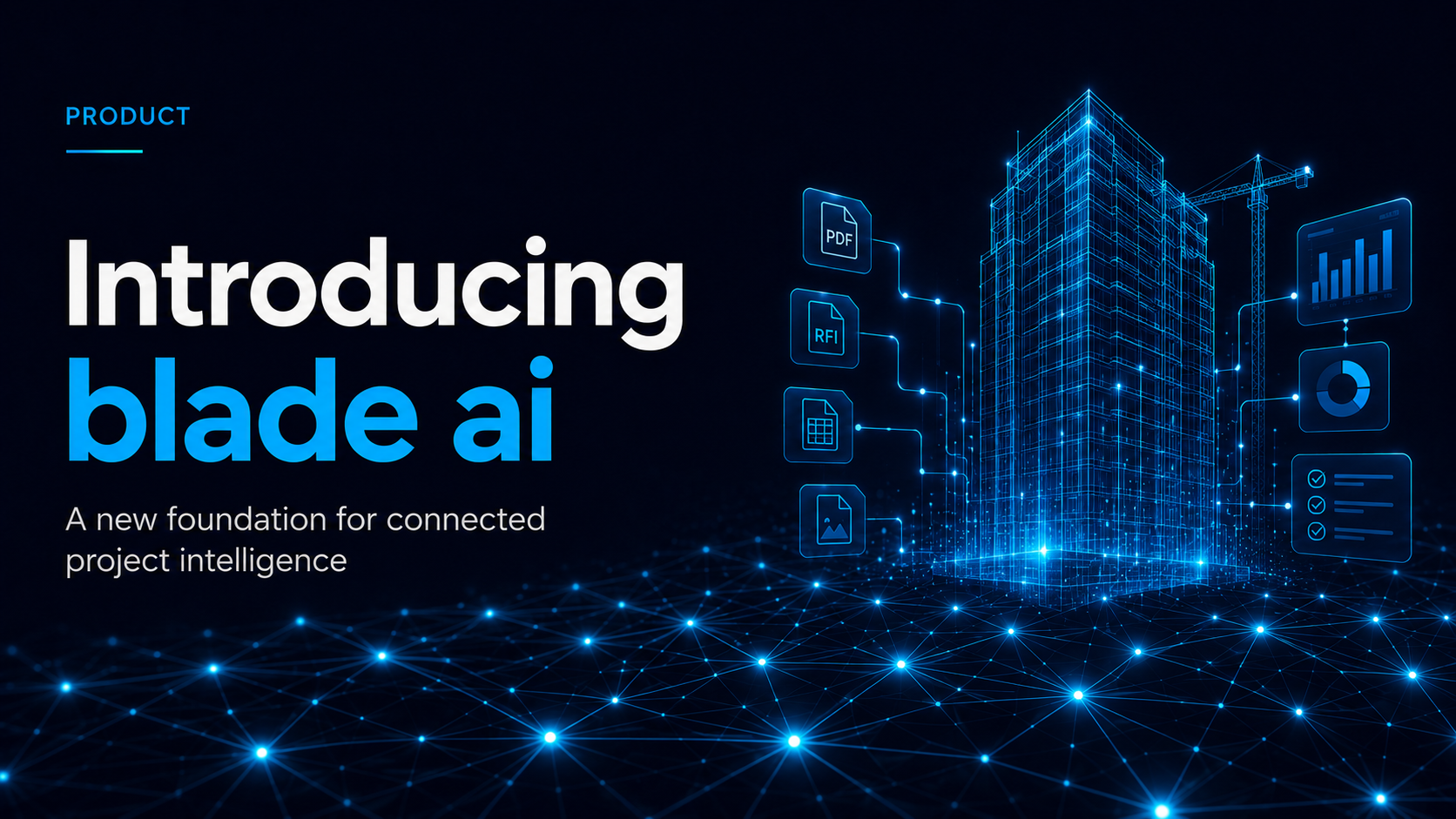
blade ai is a new technology foundation designed to change how project data is processed, conditioned, connected, and used across the full life of a project. Instead of treating documents as static files, blade ai helps unlock the information inside them and connect that information to the project baseline.
Using AI, blade ai helps auto-code and condition project data around the information that matters most: the contract, owner requirements, GC standards, project rules, locations, model objects, forms, inspections, and the unique operating knowledge that makes each builder successful.
What once required days or weeks of manual organization can now begin to happen in a much more intelligent, structured, and connected way.
The result is a living project baseline where information is no longer isolated.
Drawings connect to models. Models connect to categories, families, types, and assets. Forms connect to inspections, locations, people, and requirements. RFIs and submittals connect to the drawings, models, and decisions they impact.
This creates a stronger foundation for how teams understand the project, manage information, and act on what matters.
The blade Node.
At the center of this foundation is a simple but powerful idea: the blade Node.
Every project starts with one blade Node. Its name is the Project. And from that first node, the connected story of the project begins.
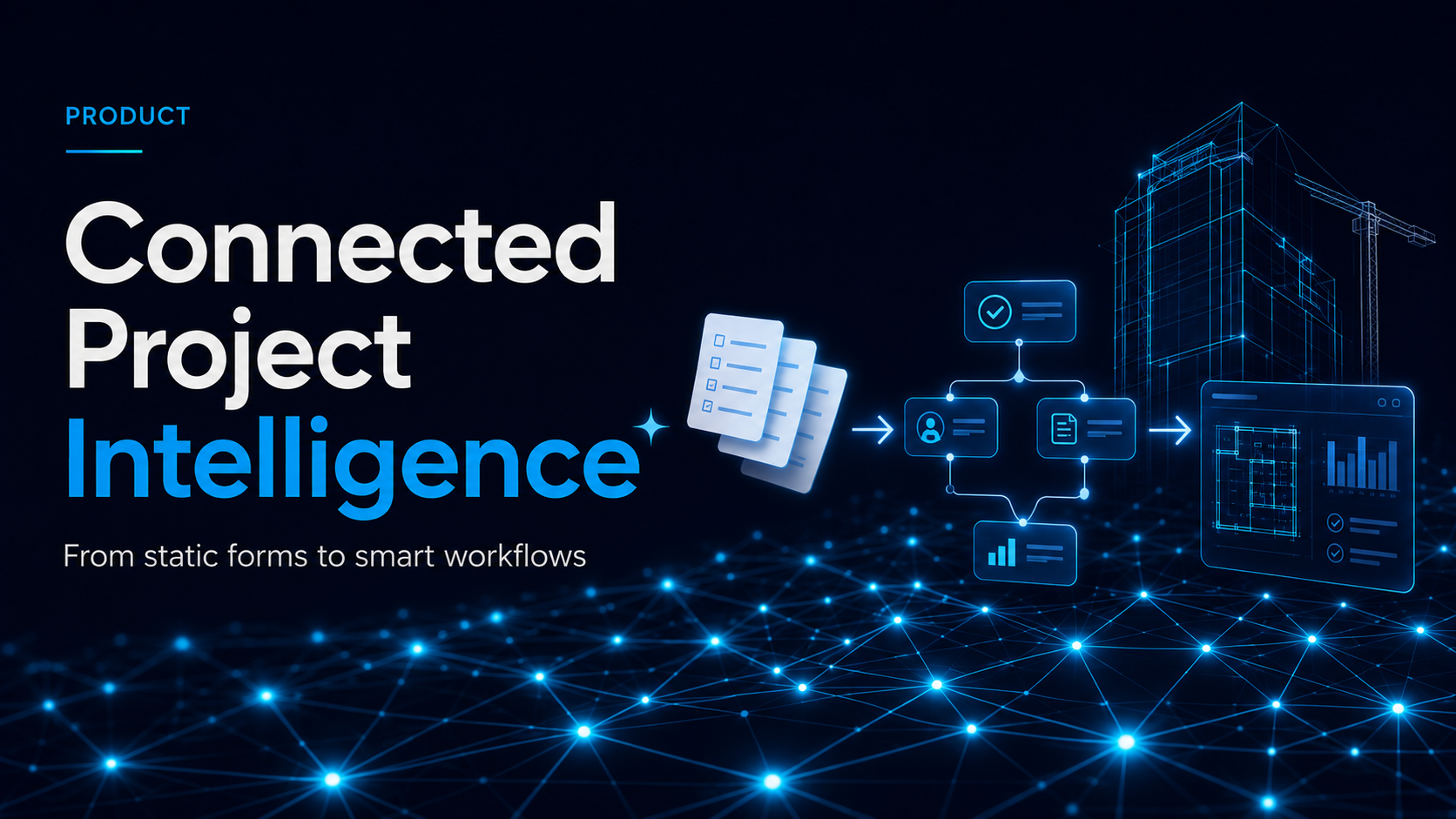
The blade Node becomes the starting point for organizing and understanding project intelligence. It helps represent how information relates across drawings, models, inspections, RFIs, submittals, forms, workflows, and other project records. One node at a time, blade ai starts turning disconnected project information into connected project intelligence.
In the next segment, we will look more closely at how the blade Node changes the way we think about project data, including how it is represented on Live Drawings, how it connects inspections, RFIs, submittals, forms, and other records, and how blade ai's new smart tools help automate customer form creation.
These tools will allow customers to create project-specific questions, workflows, and data requirements for any stage of the project, helping teams capture the right information, in the right context, at the right time.
blade ai is more than a new product feature. It is a new foundation for how construction information can be understood, connected, and put to work.
One node at a time, blade ai is helping project teams move from disconnected data to connected project intelligence.
Want to see how blade ai can help your team connect drawings, models, forms, inspections, RFIs, submittals, workflows, and project data into one living baseline? Reach out to the blade ai team and schedule a meeting.