Every significant construction decision rests on evidence. An installation is accepted because it meets a requirement. A payment is approved because progress is demonstrated. A change is justified because a condition, instruction, or impact is documented. A system is commissioned because tests show that it performs as intended.
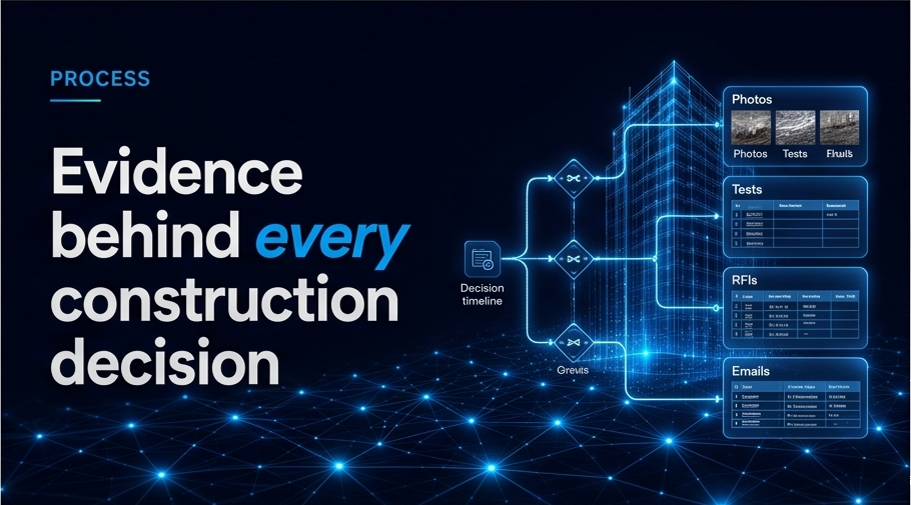
The problem is rarely that no evidence exists. The problem is that the evidence is scattered. The requirement may be in a specification. The condition may appear in a photograph. The decision may be inside an RFI response. The action may be tracked in an issue log. The approval may live in email. The final record may be exported as a PDF with little connection to the steps that produced it.
When the project later faces a closeout question, payment disagreement, warranty investigation, audit, or claim, people must reconstruct that story. They search systems, compare dates, interpret filenames, and rely on individual memory. The cost of weak traceability often appears long after the original work was completed.
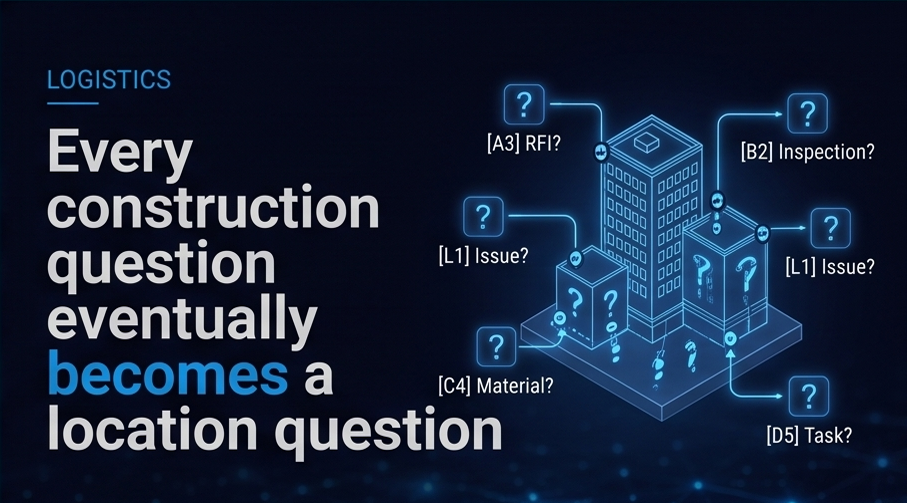
Blade AI Forms can strengthen that chain by treating evidence, provenance, versioning, and relationships as solution capabilities. Each submission carries a consistent identity and lifecycle. It can be anchored to a project location and building element. It can identify the people and organizations involved. It can point to supporting files and related records. It can retain the workflow instance and creation method that moved it into existence.
Template versioning is essential to this model. A completed record should not silently inherit today's questions when it was created under yesterday's requirements. Blade pins a submission to the exact template version used. This preserves the definition, rules, and context governing the decision at that point in the project.
That precision matters when standards, designs, or contractual requirements change. Two records with the same title may have been completed under different acceptance criteria. A reliable solution must make that difference visible. Otherwise, later reporting can combine unlike results and create the appearance of consistency where none exists.
Typed, directional relationships add another layer of clarity. A record can show that an inspection created an observation, an observation was resolved by a corrective action, and a reinspection verified acceptance. The relationship is not simply a generic attachment or hyperlink. Its direction and purpose help people-and systems-understand the sequence.
Provenance can reach to the originating question. If a failed response causes a new issue, the solution can preserve which question failed, how the issue was created, which workflow created it, and which template version supplied the rule. That detail is valuable for audits, but it is equally valuable during daily project management because reviewers can understand the problem without reopening and interpreting multiple records.
A strong evidence layer also improves AI. AI answers are more trustworthy when the system can identify the source, context, date, version, and relationships behind the information. Instead of summarizing an isolated form, Blade can evaluate a connected chain: the governing requirement, field response, photograph, reviewer decision, corrective action, and verification. The system can show not only an answer, but why the answer is supported.
Confidence should come from that traceability, not from the fluency of an AI-generated response. If the available evidence is incomplete, conflicting, outdated, or outside the user's authority, the system should expose those limitations. A construction intelligence solution earns trust by making uncertainty and source quality visible, particularly when information may affect safety, payment, schedule, compliance, or acceptance.
This creates opportunities across the project. QA leaders can identify recurring failure types and affected locations. Project executives can distinguish incomplete records from genuinely unresolved work. Payment teams can connect claimed progress to field evidence. Claims teams can reconstruct event sequences. Owners can receive closeout information with the relationships intact rather than as a final dump of disconnected files.
Human oversight remains central. Evidence does not eliminate judgment, and workflow automation should not hide how a decision was made. The solution should make requirements, calculations, sources, exceptions, approvals, and overrides visible to authorized users. People remain responsible for decisions; Blade helps ensure that those decisions are informed and traceable.
The lasting value of a construction form is not the fact that it was completed. It is the quality of the evidence chain it creates. When every requirement, observation, response, action, and acceptance remains connected, the project gains more than documentation. It gains a defensible, reusable body of knowledge.