Every project is different. The work should not be.
Construction has always lived with a contradiction. Every project is unique, yet the industry expects teams to deliver consistent results. The site changes. The design changes. The owner, consultants, trade partners, schedule, contract structure, and local requirements change. But the expectation remains the same: plan the work, coordinate it, build it safely, document it, and hand it over with confidence.
Too often, companies try to solve this contradiction by relying on exceptional individuals. A strong preconstruction manager knows which assumptions to challenge. An experienced VDC leader knows where coordination will fail. A veteran superintendent recognizes the field condition that is about to become rework. Those people are invaluable, but their judgment cannot remain trapped in personal habits, inboxes, spreadsheets, and memory. If success depends on who happens to be assigned to the project, the organization does not have a repeatable operating model. It has a collection of heroes.
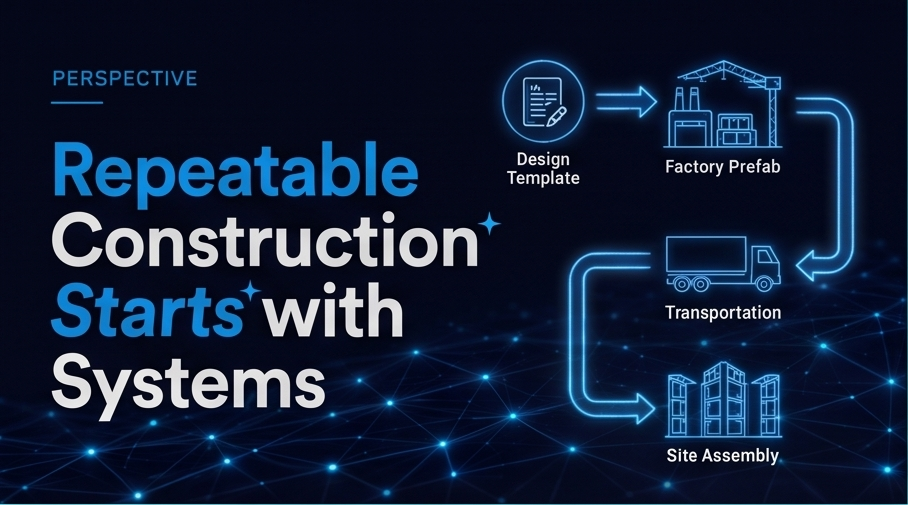
A system changes that. A system is more than software and more than a checklist. It is an agreed method for turning inputs into decisions, decisions into actions, and actions into evidence. It defines what happens, when it happens, who owns it, what information is required, and how completion is verified. Software can support the system, but technology cannot compensate for a workflow that was never clearly designed.
Preconstruction should establish the project's operating system
Preconstruction is where repeatability begins. This is the moment when the team can establish how information will move before the pressure of field execution takes over. Estimate structure, bid packages, alternates, scope boundaries, design responsibility, long-lead items, schedule assumptions, constructability issues, and owner decisions should not exist as disconnected work products. They are related parts of the same project story.
A well-designed preconstruction system preserves those relationships. A cost assumption should be connected to the scope and location it affects. A value-engineering decision should retain the reason it was made, the drawing or specification it changes, the responsible party, and its schedule consequence. A constructability issue should not disappear when the meeting ends; it should become a governed item with an owner, status, due date, supporting evidence, and a clear path into design coordination and field planning.
This is what allows one successful project to teach the next. The goal is not to force every team into identical decisions. It is to create a consistent structure for making and documenting those decisions. Standard inputs, decision gates, classifications, roles, and evidence requirements create a stable backbone while still allowing the project team to respond to unique conditions.
VDC must be connected to execution
VDC is often treated as a specialized production activity: federate the models, run coordination, track clashes, publish reports, and move on. That approach produces useful outputs, but it leaves much of the value trapped inside the coordination process. The larger opportunity is to make VDC part of the project's repeatable operating system.
A clash is not merely a colored marker in a model. It concerns specific objects, locations, systems, trades, design documents, installation sequences, access conditions, and sometimes cost or schedule exposure. Once resolved, the decision should remain connected to those elements. Otherwise, the team may solve the geometry without preserving the construction reasoning.
The same applies to model-based quantities, layout points, prefabrication decisions, penetration planning, clearance analysis, and installation work packages. Their value increases when they are connected to the field workflows that consume them. A coordinated model should influence procurement, inspections, quality planning, look-ahead schedules, work-in-place verification, and turnover-not simply produce a coordination sign-off.
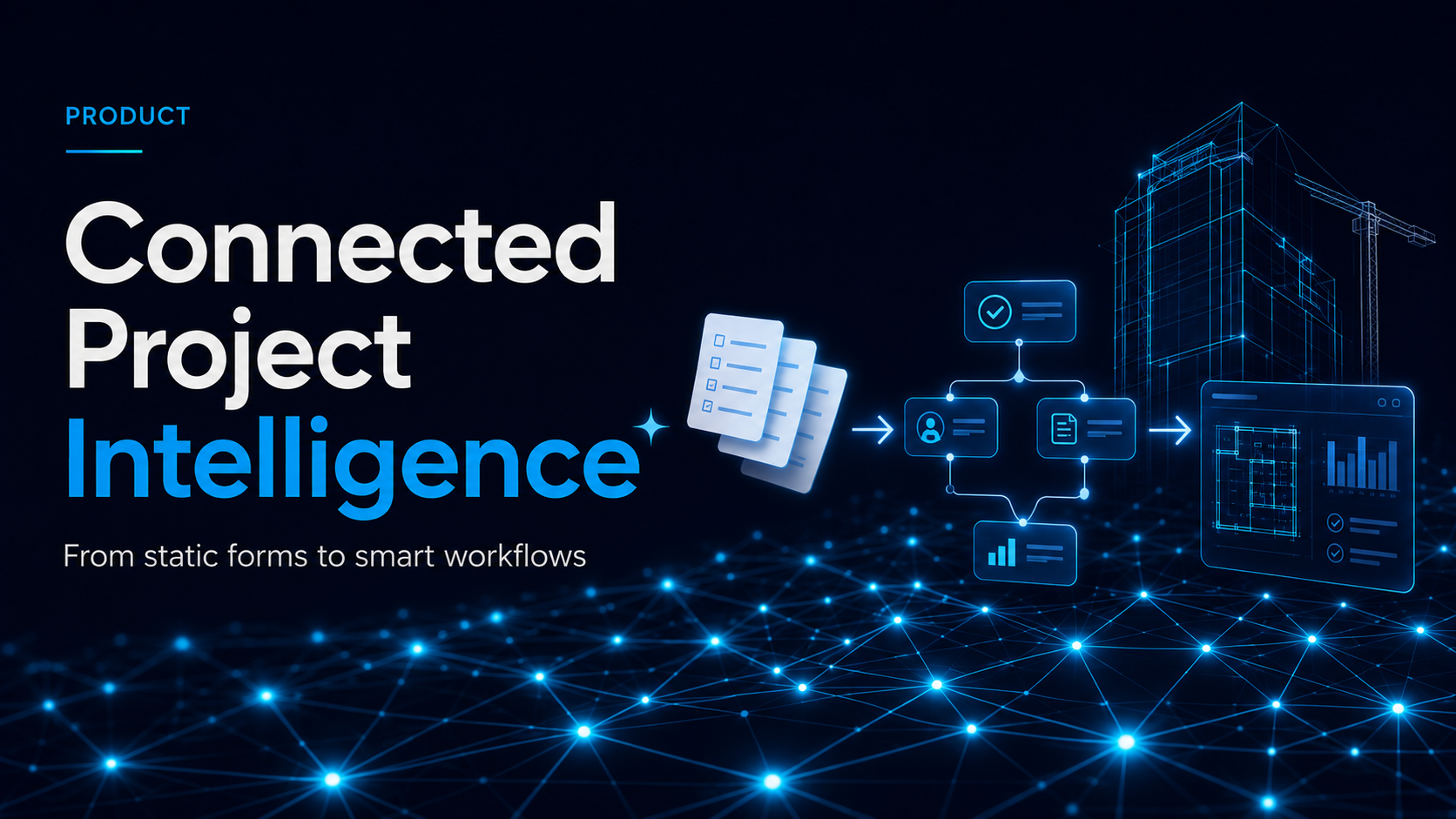
Repeatability therefore requires common handoffs. The output of one workflow must become a trusted input to the next. If each transition requires someone to download files, rename them, rebuild a spreadsheet, interpret a status, or explain what happened in a meeting, the process contains hidden labor and hidden risk.
Field execution is where the system is tested
The field reveals whether the system is real. When crews are mobilized and time is compressed, unnecessary steps are bypassed. If information is difficult to find, people use screenshots. If status is unclear, they create side lists. If the approved detail cannot be identified quickly, they call someone they trust. These workarounds are not simply resistance to process. They are evidence that the process does not match the way the work is performed.
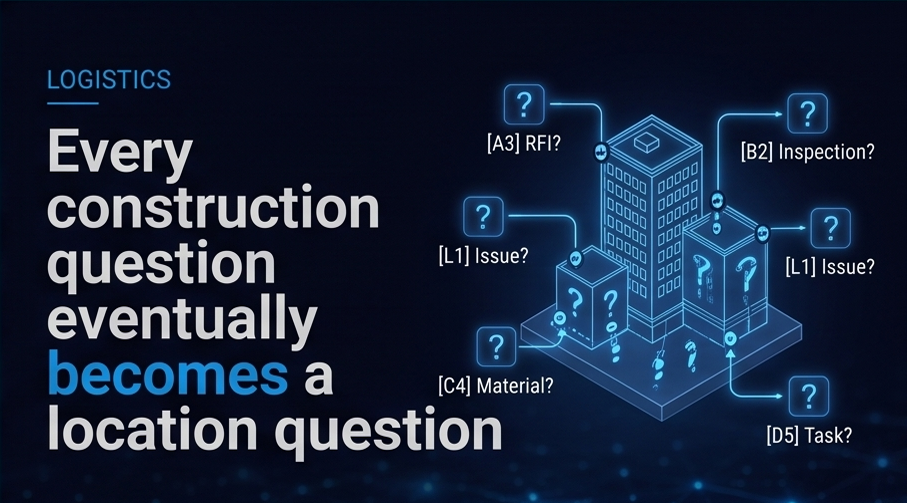
A useful field system begins with the objects and locations the team already understands: a room, wall, door, equipment item, concrete placement, inspection area, or work package. From that context, the user should be able to see the current requirement, responsible trade, relevant detail, submittal, RFI, inspection status, and supporting evidence. The system should reduce interpretation, not add another reporting burden.
Repeatable field workflows also separate status from proof. Marking an item complete is not the same as demonstrating that it meets the requirement. Completion may require an approved submittal, an inspection result, a photograph, a measurement, a test report, or an authority sign-off. Defining that evidence in advance creates consistent quality records and makes progress reporting more trustworthy.
Handover is an outcome of the system-not a final document chase
Traditional handover often becomes a late effort to reconstruct what occurred. Teams search for warranties, training records, test reports, as-built drawings, commissioning documents, and equipment data after the people closest to the work have moved on. This is expensive because turnover information was treated as a deliverable at the end rather than a byproduct of controlled execution.
In a repeatable system, handover begins when an asset, requirement, or work package is first defined. The team knows which records will be required, who will provide them, how they will be validated, and which asset or location they describe. Evidence is collected as work progresses. Changes remain traceable. Missing information becomes visible early enough to correct it.
The owner then receives more than folders of files. They receive a connected operational record: what was intended, what was approved, what was installed, what was tested, what changed, and what must be maintained. That is a materially different outcome.
The system should learn
Repeatability does not mean freezing a workflow forever. A mature system measures itself. Where do decisions wait? Which classifications create confusion? Which inspections fail most often? Which scope boundaries generate change? Which handover items consistently arrive late? Those patterns should inform the next estimate, coordination plan, procurement strategy, quality plan, and project setup.
This creates a continuous loop: standardize the work, capture the evidence, measure the outcome, and improve the standard. Over time, the organization's best practices become part of how every project operates rather than knowledge shared only by its most experienced people.
Construction will always contain uncertainty. The competitive advantage is not eliminating every variable; it is building systems that respond to variation without losing control of the story. When preconstruction, VDC, field execution, and handover operate as one connected lifecycle, repeatability becomes more than efficiency. It becomes the foundation for better decisions, reliable automation, and construction intelligence at scale.